My first bingo night was supposed to last ninety minutes. I stayed for four hours and came back the following Tuesday. That is not a personal quirk. It is the whole business model, and most people who walk into a hall for the first time have no idea they are walking into a routine that other players have kept for decades.
The appeal is not the money. Regulars talk about the daubers, the caller’s voice, the specific seat they always take, and the friend they only see here. Some of that can be scheduled, and some of it just happens. When you play bingo at Mystic Lake, you are getting the version of the night where variety shows up in the game format itself, and that variety is what keeps the crowd coming back instead of drifting off after a few visits.
So what actually keeps a bingo hall full on a Tuesday? It comes down to three things: the format, the way the room handles newcomers, and the small traditions that build up around a specific hall.
Paper Cards, Electronic Tablets, and the Real Difference
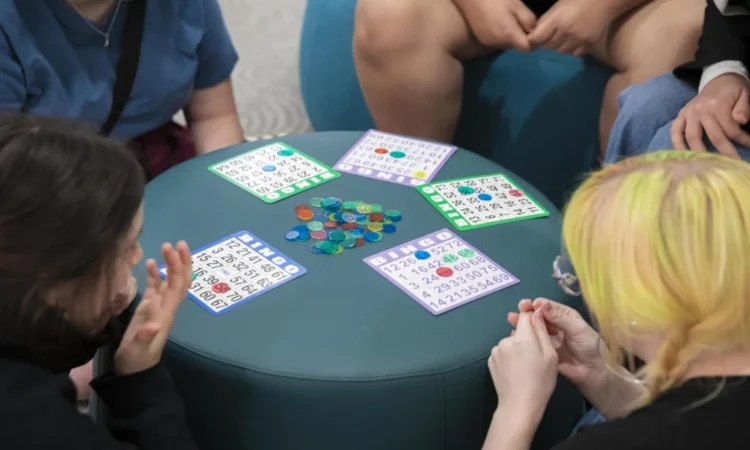
Walk into any hall and you will see two kinds of players. One group has a stack of paper cards and a dauber in each hand. The other group is staring at a tablet. Both are playing the same game, and the experience is not remotely similar.
Paper is tactile and social. You make small mistakes, you joke about them, and you end up talking to the person next to you because you both need a second to sort out a card. Electronic is faster and lets you track more cards at once, which matters during sessions with a lot of games packed back to back. If you are new, I would start with paper. Not because it is better, but because it forces you to slow down and actually learn how the patterns work before you add speed on top of it.
Then there is the format itself. Standard games follow predictable patterns: straight lines, four corners, blackout. Some halls break that up with themed sessions that change the pacing, the payouts, and how the room behaves. Those themed nights are usually where first timers either fall in love with the game or decide it is not for them. Cosmic Bingo is the example most people in the Twin Cities know, though the broader trend of themed bingo has spread across the country as halls compete for players who could just as easily stay home.
How a Hall Builds Regulars
Halls rarely retain casual visitors by accident. They build habits on purpose.
One of the tools is a loyalty program, and bingo halls are not unusual here. Loyalty programs exist across nearly every consumer industry, and they work the same way whether you are buying coffee or buying cards. According to the U.S. Census Bureau, retail and consumer spending patterns show that repeat customers drive a substantial share of revenue in service industries, which is exactly why so many venues invest in tracking your visits and rewarding them.
The second tool is scheduling. A hall that runs games at the same time every week gives you a slot to protect. You know Tuesday at seven is bingo. You do not have to decide, you just show up. That predictability is worth more than any single promotion because it removes the effort of planning.
The third tool is the caller. Sounds small. It is not. A good caller manages the room’s energy. They know when to speed up, when to let a tense game breathe, and when to crack a joke after a bad beat. Players notice, and they come back for a specific voice the way people come back for a specific bartender.
What to Do on Your First Visit
Most newcomers show up, buy the cheapest package, and leave confused. Here is what I would do instead.
- Arrive twenty minutes early. You need time to buy in, find a seat, and watch one game before you play one.
- Ask the front desk which session is best for beginners. They will know, and they will point you to it.
- Buy a mid range package, not the cheapest. The cheapest usually limits how many games you can play, which means fewer chances to learn.
- Sit near someone who looks like they have done this before. Regulars are almost always happy to explain a pattern.
- Set a spending limit before you walk in. It is easier to stick to when you decide it in the parking lot rather than at the counter.
- Skip the themed night for your first trip. Learn the basics in a standard session, then come back for the louder format.
The themed nights are worth working up to. They are the ones where a hall’s personality shows, and where a casual visitor is most likely to become a regular. Bring someone with you. The night is better with a second person around the table.
The Rituals Are the Product
Here is the part that rarely gets written down. Regulars develop small routines, and those routines are what a hall is really selling. Someone always parks in the same row. Someone brings the same snack. A group claims the same table every week and gently resents anyone who takes it. None of that shows up on a schedule, and none of it can be manufactured by a marketing team.
That is also why halls compete the way they do. They invest in the physical space, the technology, the loyalty perks, and the schedule because those are the levers they control. The rituals do the rest. A hall that respects the rituals, by not moving the seating around every month or canceling sessions without warning, keeps its regulars for years. A hall that ignores them loses them quietly and never quite figures out why.
Technology plays a role here too. Mobile apps let players buy packages in advance and skip the line at the counter, which sounds minor until you have stood in a Tuesday night queue. According to the National Institute of Standards and Technology, reliable digital systems depend on consistent standards and careful implementation, and that is true whether you are running a payment network or a mobile app at a bingo hall. When the app works, you get your seat faster. When it does not, the whole night starts twenty minutes late.
Why the Format Has Outlasted the Predictions
People have been predicting the end of bingo for decades. It keeps not happening. The reason is that bingo is one of the few low barrier social games that works for an eight year old and an eighty year old in the same room. According to the Bureau of Labor Statistics, leisure and hospitality is one of the largest employment sectors in the country, and gaming venues make up a meaningful slice of that. The category is not shrinking. It is just less visible than it was, because the players are not posting about it.
That invisibility is why first timers are often surprised by how many people are already inside. The room is full. The caller is on. Someone is going to win a jackpot tonight. You could be the person who came for ninety minutes and stayed for four hours. That is not a warning. It is the point.
If you have been meaning to try a night out that is not dinner and a movie, pick a session and go. Bring a friend, bring a dauber, and give yourself one full evening to figure out whether it clicks. If it does, you will be back next week, and the person who sold you your first card will remember your name.