The conventional wisdom says EVs belong in San Francisco or Santa Monica, not Fresno, Tulare, or Visalia. That take is about five years out of date. California’s Central Valley checks boxes most coastal EV advocates overlook, and if you’ve been sitting on the fence about going electric, the geography, the infrastructure investment, and the driving patterns of the Valley may already be working in your favor. Here’s the honest case.
The Range Anxiety Problem Is Basically a Non-Issue Here
Range anxiety sounds frightening until you map your actual daily mileage. Most Valley residents drive predictable, flat routes: Visalia to Fresno, home to work, school pickups, weekend errands. According to the U.S. Department of Transportation, the average American drives fewer than 40 miles per day. An electric vehicle with 250 miles of EPA-rated range covers that six times over on a single charge.
The terrain works in your favor too. The San Joaquin Valley is remarkably flat, which means your battery doesn’t bleed energy climbing grades the way it would on a coastal commute through the Santa Cruz Mountains. Regenerative braking in stop-and-go traffic also recovers energy that a gas engine simply burns off as heat. The net result is that real-world range in the Valley often meets or exceeds EPA estimates rather than falling short of them.
This is exactly where a vehicle like the Ford Mustang Mach-E for Sale in Visalia starts to make real practical sense. The extended-range version delivers up to 312 miles on a full charge, and three drive modes let you dial in efficiency versus performance depending on whether you’re running the 99 or the 198 on a summer afternoon.
California Is Pouring Money Into Charging Infrastructure Right Now
Charging availability is the single most cited reason people hesitate to buy an EV. The gap between concern and reality is closing faster than most people realize, and it’s happening by policy design.
In December 2024, the California Energy Commission approved a $1.4 billion investment plan specifically to expand the state’s charging and hydrogen refueling network. That’s not a proposal. It’s a funded, approved buildout targeting light, medium, and heavy-duty vehicles across the state, including the Central Valley corridors that have historically lagged behind coastal cities.
New fast-charging hubs are being prioritized in Fresno, Bakersfield, and Stockton, and that wave is moving through Tulare County. California already leads every other state in the number of publicly available EV charging ports, and the gap is growing. If you buy an electric vehicle today, the infrastructure around you at purchase time is not the infrastructure you’ll be living with in two or three years.
“Our goal is to make driving an EV a no-brainer choice for Californians. They are fun to drive, never need an oil change, don’t cause smog, and it’s getting easier to charge your vehicle with public EV infrastructure.” – California Air Resources Board spokesperson, as reported by EV Infrastructure News
The Economics Make More Sense Away From the Coast
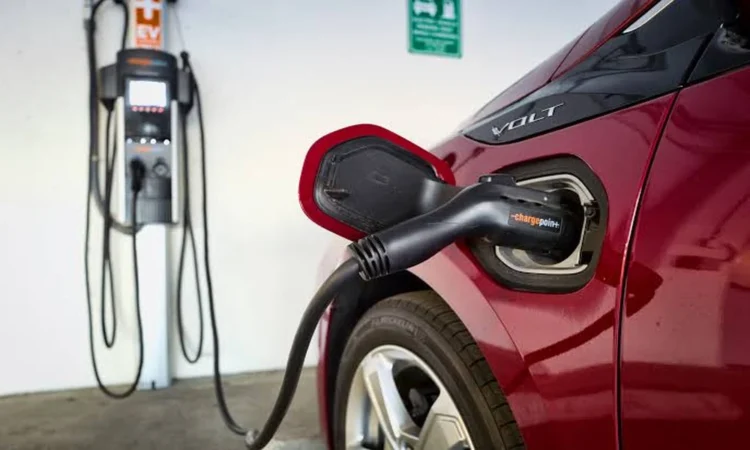
Housing costs in Visalia, Tulare, and the surrounding area are a fraction of what they are in the Bay Area or Los Angeles. That matters for EV ownership in one specific way: you’re far more likely to have a garage or a dedicated parking spot where you can install a Level 2 home charger. Home charging is the cheapest and most convenient way to keep an EV topped up, roughly equivalent to paying less than a dollar per gallon equivalent on off-peak electricity rates. Coastal apartment dwellers frequently can’t access that advantage.
Gas prices in California have historically run above the national average, which makes the per-mile cost savings of electric driving more pronounced here than in almost any other state. You’re already paying more at the pump than people in Texas or Florida. Every mile you shift from gasoline to electrons narrows that cost gap faster.
The EV market itself has also matured. According to Next10’s 2025 Green Innovation Index, California recorded roughly 387,000 new battery electric vehicle registrations in 2024, and the sheer volume of models now on the market means you’re not stuck choosing between a handful of options at one price point. Competition has pushed manufacturers to deliver more value, better range, and faster charging across every segment.
What the Mach-E Actually Gets Right for Valley Driving
The Valley has a specific character as a driving environment: long straight stretches, blazing summers, a mix of city and rural roads, and the occasional trip up into the Sierra Nevada foothills. Not every EV handles that combination well.
The 2024 Mach-E’s powertrain lineup runs from 266 horsepower in the standard configuration all the way to 480 horsepower in the GT trim, which hits 0 to 60 mph in 3.8 seconds. The DC fast charging system can take the battery from 10% to 80% in roughly 36 minutes on a Level 3 charger, which is close to a gas stop when you factor in the coffee and restroom break you were taking anyway. For longer trips to LA or the Bay, that cadence works.
The thermal management system matters more in the Valley than it does anywhere else on the West Coast. Summers in Visalia regularly push above 100 degrees Fahrenheit, and battery performance in heat is a genuine engineering concern across the EV category. Ford has continued to refine the Mach-E’s thermal architecture through software updates, and real-world owner reporting in hot-climate markets has been steadily more positive with each model year.
One-Pedal Drive, available on the Mach-E, also pays dividends in the Valley’s suburban grid pattern. Once you’ve adapted your driving style, you’ll rarely touch the brake pedal in stop-and-go traffic, and you recover energy every time you lift off the accelerator.
The Valley Driver Decision Matrix: A Simple Framework
Before buying any EV, run yourself through what I call the Valley Driver Decision Matrix. It has four questions.
- Daily mileage under 60 miles? If yes, almost any modern EV’s range is a non-issue for you.
- Home or dedicated workplace charging available? If yes, your cost per mile drops significantly versus public charging alone.
- Do you take frequent long-distance trips without predictable stopping points? If yes, pick the extended-range trim and plan two charging stops per 600-mile round trip.
- Is air conditioning critical to your daily comfort? Yes, obviously, because it’s Visalia. Factor a 10% to 15% range reduction in peak summer heat into your daily math and confirm your chosen model still clears your needs.
Four yeses and you’re in excellent shape. Three yeses is still a strong go. Two or fewer means you might want a plug-in hybrid as a stepping stone rather than a full battery-electric vehicle.
The Bottom Line on Going Electric in the Valley
The coastal bias in EV conversations has done Valley residents a disservice. Flat terrain, high gas prices, accessible home charging, and a state charging network that’s being aggressively funded all point in the same direction. The question isn’t really whether an EV makes sense in Visalia. The question is which one fits your specific driving life and what you’re willing to spend to get it.
Do you already have a home charger set up, or is that still the thing stopping you from making the jump?